PAS Capital Management
Your Retirement. More Investment Choices. Greater Control.
 Discover how a Self-Directed Roth IRA can expand your retirement investment opportunities—and why some investors establish an IRA-owned LLC to simplify the management of real estate and alternative investments.
Most people associate retirement accounts with stocks, mutual funds, and ETFs. But retirement investing doesn’t necessarily have to stop there.
A properly structured Self-Directed Roth IRA may allow you to invest in assets beyond those typically offered by conventional brokerage firms, while preserving the Roth IRA’s valuable tax advantages.
Explore How It Works ↓
The Power of Tax-Free Retirement Growth
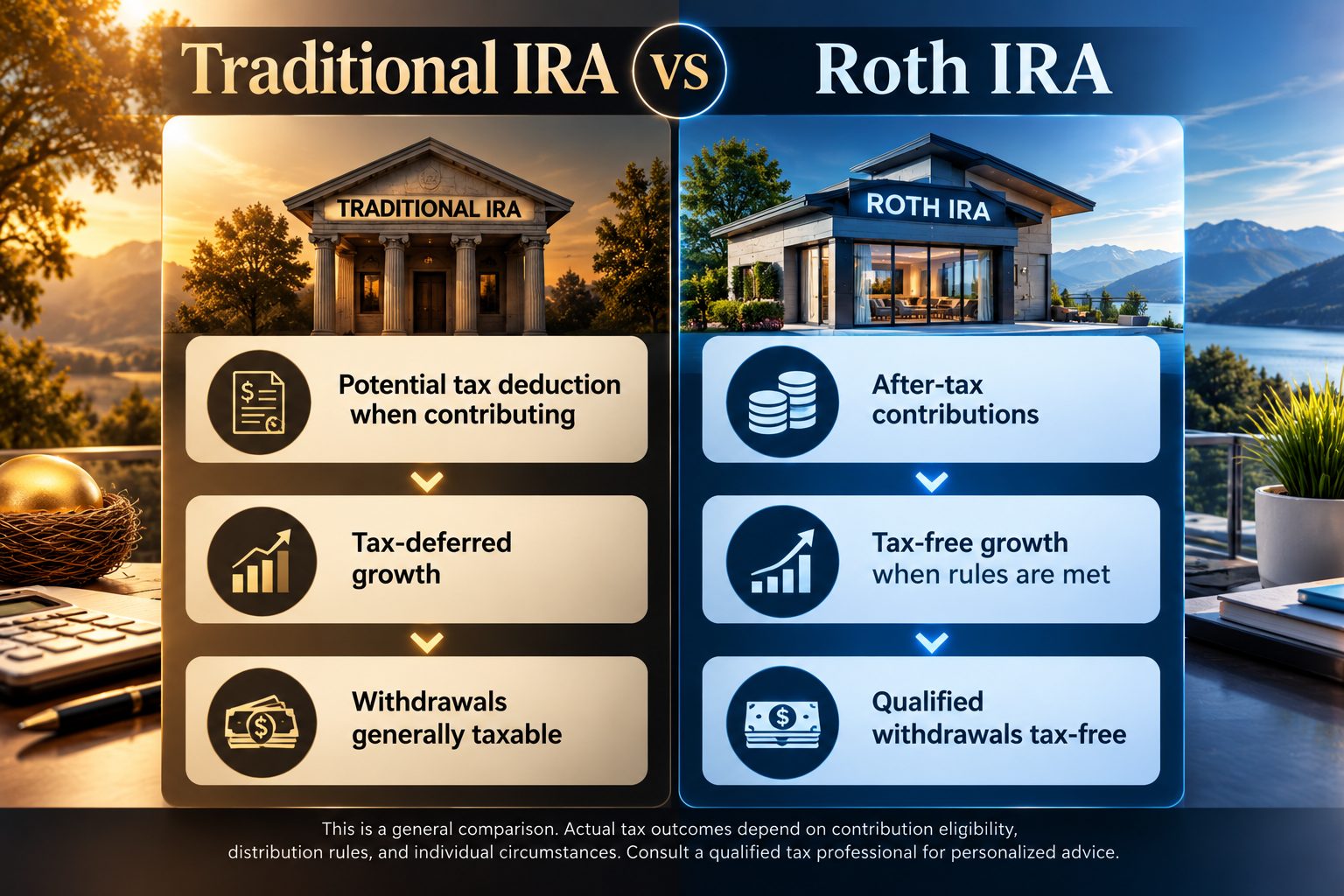 One of the most compelling features of a Roth IRA is its tax treatment.
Unlike a traditional IRA, which generally offers tax-deferred growth, a Roth IRA is funded with after-tax money. Investments within the account can grow without annual federal income tax on ordinary investment earnings, and qualified retirement withdrawals are tax-free.
Actual tax outcomes depend on contribution eligibility, distribution rules, and individual circumstances.

What Makes a Roth IRA Self-Directed?
Think Beyond Stocks, ETFs, and Mutual Funds
A Self-Directed Roth IRA is not a new kind of tax shelter. It is a Roth IRA administered by a custodian that permits a wider range of investments.
The basic Roth tax rules remain the same. What changes is the investment menu.
 Conventional Roth IRA
Common investment choices:
- Stocks
- ETFs
- Mutual funds
- Bonds
- CDs and cash equivalents
Self-Directed Roth IRA
May also allow:
- Investment real estate
- Private business investments
- Private lending and notes
- Certain precious metals
- Other permitted alternative assets
Important distinction: Greater investment choice does not mean every investment is allowed, suitable, or tax-free in every circumstance. The custodian’s policies, federal tax rules, and prohibited-transaction restrictions still apply.

